Indivd
•
•
Intro
A food and beverage retailer in Northern Europe achieved 97.17% absolute counting accuracy at one store, where conversion rests entirely on the count at the door.
A food and beverage retailer in Northern Europe had its people count verified at one store on 13 May 2026.
Across six opening hours selected by the retailer, Indivd’s count was compared with an independent count of the same hours. The verification covered 927 visitors, one entrance line, and one exit line on a single camera.
The store achieved 97.17% absolute accuracy, reported at a 99.99% confidence level.
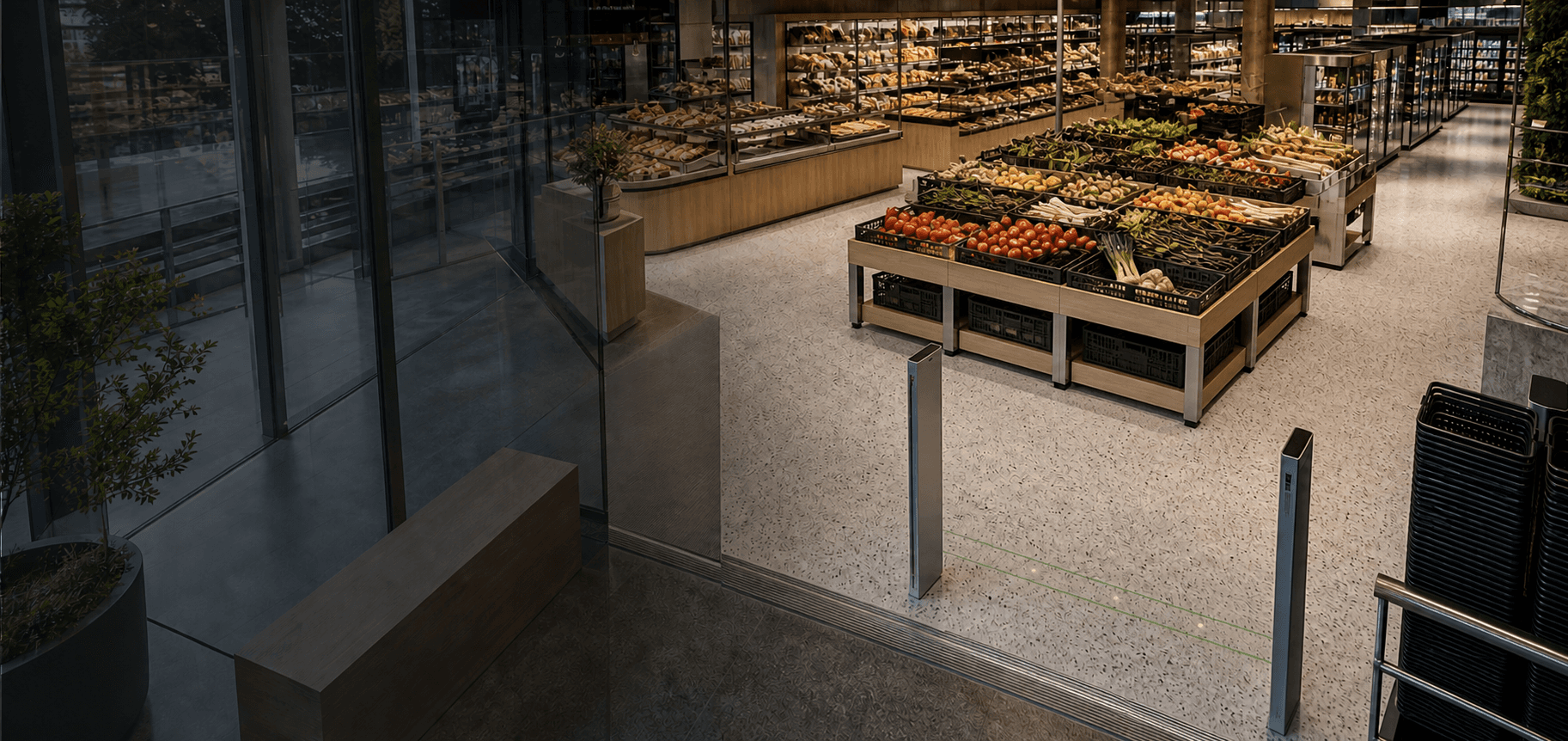
A Monday in May at a food and beverage store in Northern Europe. Six opening hours, 927 visitors, and every crossing measured at one camera carrying an entrance line and an exit line.
The retailer selected the hours.
The store
One crossing sits beneath every visitor metric
A food and beverage store makes daily decisions using its visitor count. Which hours need another pair of hands? Did a new range bring more people inside? What share of visitors made a purchase?
In a store built around short visits and relatively small baskets, the difference between a successful day and a merely busy one often comes down to conversion. Every conversion calculation depends on the count at the entrance.
Sales do not rise automatically with visitor numbers. What turns visits into revenue is the combination of conversion and appropriate staffing. The visitor count is therefore the denominator beneath several of the store’s most important performance measures.
At this location, one entrance line and one exit line produce that count.
Accuracy is not something a model has. It is something a deployment produces.
The check
Both counting lines assessed together
The retailer decided where, when, and how much was tested.
Across six opening hours, 927 visitors were included in the comparison. Indivd’s count was compared with an independent count of the same hours.
The verification covered the entrance and exit lines on one camera. Both lines were assessed together as the complete counting set for the store.
The store achieved 97.17% absolute accuracy. The result was reported at a 99.99% confidence level.
Every counting error was included. A missed entry, a missed exit, and a person counted even though they did not cross were each recorded as errors. Errors in opposite directions were not allowed to cancel one another.
Nothing from a completed check is retained, so the verification cannot be replayed retrospectively. The retailer can request a new check during hours of its choice and provide the same test to anyone it appoints.
DEFINITION
Absolute accuracy is 100% minus the absolute error rate.
Undercounts and overcounts are both errors. A missed entry, a missed exit, and a counted person who never crossed are each counted in full. Errors in opposite directions cannot cancel one another.
What the number carries
A conversion rate with a verified visitor count beneath it
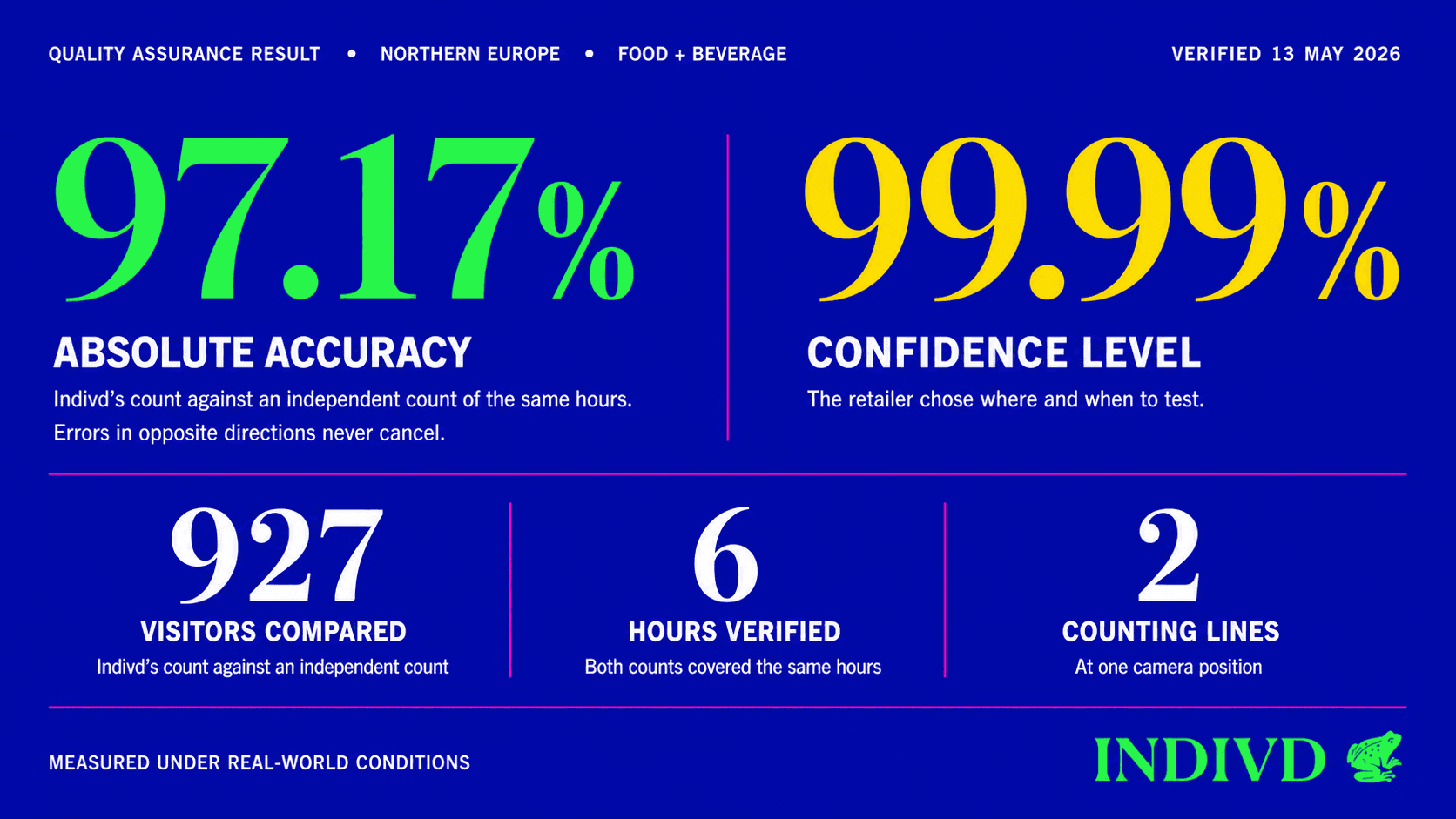
Verified on 13 May 2026: a food and beverage store in Northern Europe achieved 97.17% absolute accuracy against an independent count of the same hours.
The verification covered:
• 927 visitors
• 6 opening hours
• 2 counting lines
• 1 camera
• 99.99% confidence level
Two counting lines may look like a small test, but 927 visitors crossed them during the six selected hours. The store’s conversion rate, staffing decisions, and hourly performance analysis all depend on that visitor count.
An overcount can make conversion appear lower than it really is and suggest that more visitors entered than the store actually received. An undercount can make conversion appear stronger and conceal periods when staffing did not match demand.
Because there is no second visitor measurement inside the store, an error at the entrance can carry through every metric built on the count. Verifying both counting lines means checking the visitor data at its source.
In a separate engagement, KPMG audited Indivd’s counting accuracy at a major retailer’s store against manual ground truth. Every camera tested came within 1.17%, the strongest result of any system included in that audit.
The next question for the store is no longer whether the visitor count can support its conversion rate. It is what the store can learn from the visitors who entered but did not buy.
FAQ
What is in-store bounce rate?
In-store bounce rate is the share of visitors who enter and leave again within a short window without engaging with the store. It separates traffic that arrived from traffic that had a visit, and it can only be as accurate as the entrance count it is calculated from.
How do you measure conversion rate in a food and beverage store?
Divide transactions by visits for the same period. In a format built on short visits and small baskets, conversion is the measure that separates a good day from a busy one, which puts the entire weight of the calculation on the count at the door.
How accurate are people counters in food and beverage retail?
This verified food and beverage store reached 97.17% absolute accuracy against an independent count of the same hours, reported at a 99.99% confidence level.
Why do quick-visit stores need accurate footfall data?
Because volume at the door is high relative to the number of transactions. The same absolute counting error moves conversion further in a quick-visit format than it does in a store where people stay for an hour.
How much data is needed to verify a people counting system?
Enough crossings to be representative rather than a fixed number of hours. This check covered 927 visitors across six opening hours chosen by the retailer, which was sufficient to report at a 99.99% confidence level.
Can a third party verify Indivd's counting accuracy?
Yes. The customer decides where, when, and how much is tested, can run the check without Indivd present, and can put the same test in anyone else's hands.